
 de
de
Informationsschutz begleitet jeden Lebensabschnitt
Folgen Sie OHMIEX Intelligence für weitere wertvolle Informationen, um frühzeitig informiert zu sein

Folgen Sie OHMIEX Intelligence für weitere wertvolle Informationen, um frühzeitig informiert zu sein
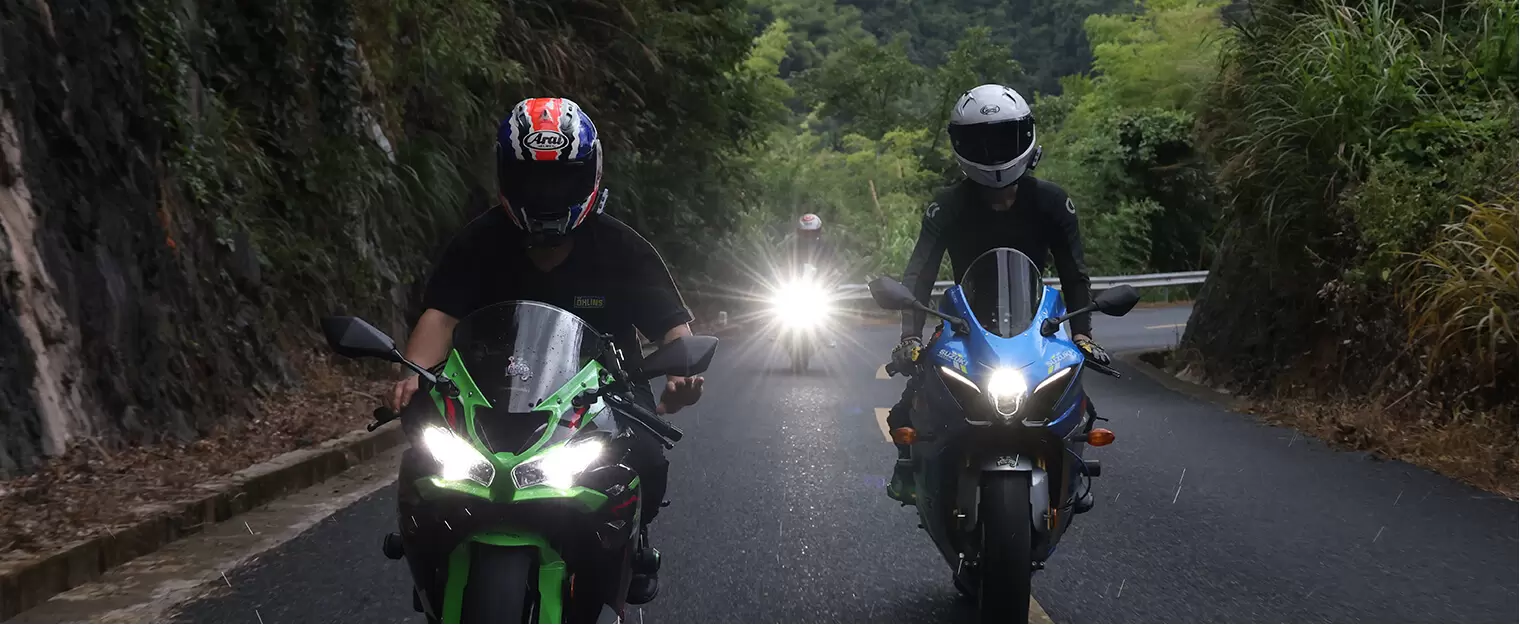
In professional motorsports such as MotoGP, communication is treated as a mission-critical system. Instructions from race engineers reach riders with precision, clarity, and near-zero latency. Every message is intentional, filtered, and optimized for a high-noise, high-speed environment. There is no room for ambiguity, dropouts, or guesswork.
Yet when we step away from the paddock and onto public roads—weekend rides through mountain passes, long-distance touring with friends, or daily group commutes—the experience is strikingly different. Helmet intercoms that promise clarity often deliver wind roar. Conversations are interrupted by disconnections. Critical navigation prompts arrive late or not at all. Riders are left repeating themselves, raising their voices, or simply giving up on communication altogether.
This contrast exposes a reality that many riders intuitively feel but rarely articulate: despite years of product iterations, the core dilemma of helmet communication has not truly been solved.
Discussions with race technicians, product engineers, and seasoned touring riders point to a shared conclusion. The issue is not a lack of features. Modern helmet communication systems are packed with specifications—Bluetooth versions, mesh networking, voice assistants, app-based controls. The problem lies in execution under real riding conditions.
On the track, communication systems are designed around a single objective: deliver clear, reliable information at speed. On public roads, however, communication devices are expected to do everything at once—intercom, music streaming, navigation, phone calls—often with hardware and software compromises that undermine the fundamentals.
Riders quickly recognize the trade-offs:
Excellent audio quality in controlled conditions, but unstable connections once the group spreads out.
Advanced feature sets paired with battery life that cannot support a full day’s ride.
Aggressive noise reduction that removes wind noise, but also suppresses a rider’s voice or a teammate’s warning.
These shortcomings are not minor inconveniences. They affect safety, confidence, and the overall riding experience.
On mountain roads, communication serves a very different but equally critical role as it does on the racetrack. Riders rely on intercoms to warn of gravel in corners, sudden braking, route changes, or mechanical issues. Clear communication reduces reaction time and cognitive load, allowing riders to focus on the road rather than troubleshooting their equipment.
When communication fails, riders compensate in risky ways: hand signals at speed, sudden lane changes, or delayed responses to hazards. In long-distance touring, fatigue amplifies these risks. A dead battery or unstable connection late in the day does more than break the conversation—it removes a layer of situational awareness.
This is why helmet communication should be evaluated less as a consumer gadget and more as a riding system with safety implications.
Across use cases—from racing environments to open-road touring—three technical pillars consistently determine whether a communication system succeeds or fails.
Noise cancellation is often marketed aggressively, but effective noise management is more nuanced than simply removing wind sound. At highway speeds, wind noise overlaps with human speech frequencies. Poorly tuned algorithms can overcorrect, filtering out not just noise but also critical voice information.
A robust system must distinguish between constant environmental noise and dynamic human speech in real time. This requires both capable hardware and well-trained algorithms. In group riding scenarios, clarity matters more than studio-quality sound. A slightly compressed voice that is always intelligible is far superior to high-fidelity audio that disappears when conditions change.
Battery capacity alone does not guarantee endurance. Real-world usage involves intercom channels opening and closing, music streaming, navigation prompts, and constant wireless communication. Inefficient power management can drain even large batteries quickly.
For riders, battery anxiety is not abstract. A communication system that fails mid-ride removes a key layer of coordination and reassurance. On multi-day tours or remote routes, this can escalate from inconvenience to genuine concern.
A reliable system must be designed around realistic riding durations, not laboratory benchmarks. Fast charging helps, but consistency over long sessions is the true measure of performance.
Group rides are dynamic. Distances between riders change. Terrain interferes with signals. Riders join or leave the group. Communication systems that require constant manual re-pairing or complex group management introduce distraction at precisely the wrong moments.
Stabilität bedeutet nicht, um jeden Preis eine perfekte Verbindung aufrechtzuerhalten; es bedeutet vorhersehbares Verhalten. Fahrer sollten verstehen, wie das System reagiert, wenn jemand außer Reichweite gerät, und wie schnell es sich erholt. Eine nahtlose Wiederverbindung ist weitaus wertvoller als die theoretische maximale Reichweite, die nur unter idealen Bedingungen funktioniert.
Viele Produkte versuchen, sich eher durch Funktionserweiterung als durch grundlegende Verfeinerung zu differenzieren. Sprachassistenten, App-Ökosysteme und anpassbare Soundprofile sehen auf den Datenblättern zwar attraktiv aus, erhöhen jedoch häufig die Systemkomplexität, ohne auf das Kernszenario des Fahrens einzugehen.
Jede zusätzliche Funktion konkurriert um Rechenleistung, Akkukapazität und Benutzeraufmerksamkeit. Wenn die Grundlagen nicht grundsolide sind, können diese Extras das Gesamterlebnis beeinträchtigen. Am Ende verwalten Fahrer das Gerät, anstatt davon zu profitieren.
Die erfolgreichsten Lösungen im Motorsport folgen einer anderen Philosophie: Technologie soll im Arbeitsablauf verschwinden. Wenn die Kommunikation intuitiv funktioniert, müssen Fahrer nicht mehr darüber nachdenken.
MotoGP-Teams investieren stark in die Kommunikationszuverlässigkeit, da die Kosten eines Ausfalls unmittelbar und messbar sind. Auf öffentlichen Straßen sind die Folgen weniger dramatisch, aber nicht weniger real. Es gelten die gleichen Grundsätze:
Geben Sie Klarheit Vorrang vor Neuheit.
Entwerfen Sie für Worst-Case-Bedingungen, nicht für Marketingdemos.
Reduzieren Sie die kognitive Belastung des Benutzers.
Wenn diese Prinzipien die Entwicklung leiten, wird die Technologie eher zum Wegbereiter als zur Ablenkung.
Gespräche mit Tourenbegeisterten und Alltagsfahrern zeigen ein einheitliches Muster. Wenn sie gezwungen sind, Prioritäten zu setzen, sind die meisten Fahrer bereit, weniger Funktionen zu akzeptieren, wenn das System Folgendes bietet:
Klare Sprachkommunikation mit hoher Geschwindigkeit.
Eine Batterie, die die gesamte Fahrt ohne Sorgen durchhält.
Eine Verbindung, die ohne ständige Eingriffe stabil bleibt.
Dies sind keine Premium-Erwartungen; es handelt sich um Grundvoraussetzungen. Ein Produkt, das sie konsequent umsetzt, ist weitaus wertvoller als eines, das in einem Bereich überragend ist, in einem anderen jedoch versagt.
Die nächste Generation von Helmkommunikationssystemen wird nicht dadurch gewinnen, dass sie lauter, auffälliger oder komplexer ist. Die Marktakzeptanz wird Lösungen begünstigen, die Kommunikation als integrierte Fahrfunktion behandeln – eine Funktion, die sich an den Kontext anpasst, Ressourcen intelligent verwaltet und die Aufmerksamkeit des Fahrers respektiert.
Von Rennstrecken bis hin zu Bergstraßen ist das Problem klar erkannt. Die Chance liegt nun in diszipliniertem Engineering und szenarioorientiertem Design. Wenn die Grundlagen endlich kompromisslos umgesetzt werden, wird die Helmkommunikation kein Gesprächsthema mehr sein, sondern etwas, dem die Fahrer einfach vertrauen können.
Und vielleicht ist das der wahre Maßstab für Erfolg: Wenn die Stille nicht mehr durch „Kannst du mich jetzt hören?“ unterbrochen wird. sondern durch selbstbewusste, zeitgemäße Worte, die genau dann ankommen, wenn sie gebraucht werden.
Bereit, ohne Rätselraten loszufahren?
Stop adapting your riding style to unreliable communication. Whether you are carving mountain roads with friends or logging serious miles on long-distance tours, clear and dependable helmet communication should be a given—not a compromise.
Choose a solution built around the fundamentals that matter most: consistent clarity at speed, all-day battery confidence, and stable connections that work without constant adjustment. When communication fades into the background, your focus stays where it belongs—on the road ahead.
Re-evaluate what you expect from your riding gear. Invest in communication that works as hard as you do, from the first mile to the last.


 Email
Email WhatsApp